Iram S. is a Content Manager who has written over 200 articles for Mc Starters. Her skills in SEO, analytics, and attention to detail have helped her create excellent content on various topics like Technology. She also enjoys writing about cooking and clothing brands. She lives in Pakistan and likes learning new things in her free time.
Regulatory changes have a transformative effect on industries, and the world of InsurTech is no exception. The evolving regulatory landscape can reshape the way insurance and technology intersect.
This article delves into the multifaceted impact of regulatory changes on InsurTech, catering to both those new to the industry and seasoned experts.
The Positive Sides of Regulatory Changes
Fostering Technological Innovation
Example: Regulatory sandboxes have given a safe playground for InsurTech startups to test new technologies without the risk of severe penalties.
Innovation lies at the heart of InsurTech. Regulatory changes that support experimentation can catalyze the development of cutting-edge solutions. With regulatory sandboxes providing a controlled environment, startups can test, refine, and prove their innovations without being hindered by immediate compliance pressures.
Ensuring Consumer Protection
Example: Regulations now require increased transparency in how insurance premiums are calculated, protecting consumers from unfair practices.
The intersection of technology and insurance demands a delicate balance between innovation and consumer protection. Regulatory updates can enforce greater transparency in algorithmic decision-making, ensuring customers understand how their premiums are calculated and avoiding discriminatory practices.
Creating Market Standardization
Example: The adoption of international data protection rules makes it easier for InsurTech companies to expand globally.
The global nature of necessitates a consistent framework for companies to operate across jurisdictions. Regulatory harmonization, such as the adoption of international data protection standards, simplifies expansion efforts and enables InsurTech companies to navigate the complexities of multiple markets seamlessly.
The Downside of Regulatory Changes
Barriers to Market Entry
Example: The high capital requirements for startups have made it increasingly difficult for new players to enter the market.
While regulations aim to protect consumers and maintain market stability, they can inadvertently create barriers to entry, particularly for startups. High capital requirements and compliance costs can pose challenges for innovative entrepreneurs seeking to disrupt the industry.
Increased Compliance Costs
Example: New data protection laws have forced companies to invest in cybersecurity measures, driving up operational costs.
Regulatory compliance comes at a cost, and InsurTech companies must allocate resources to meet these obligations. With the rise of data breaches and cyber threats, new regulations often require investments in robust cybersecurity infrastructure, leading to increased operational expenses.
Slowing Down Technological Innovation
Example: Over-regulation can stifle the very innovation that InsurTech aims to foster.
Balancing innovation with regulation is a delicate dance. Overly stringent regulations can inadvertently impede technological advancement by creating a risk-averse environment. InsurTech companies might hesitate to embrace new technologies due to the fear of non-compliance, limiting the industry’s growth potential.
Regulatory Impact on AI in InsurTech
Balancing Innovation and Ethical AI
Example: Regulatory frameworks are being developed to ensure ethical and responsible AI use in the insurance industry.
The integration of artificial intelligence (AI) in InsurTech brings both promise and challenges. As AI algorithms become central to decision-making, regulatory bodies are working to establish guidelines that promote transparency, fairness, and accountability in AI-driven insurance practices. Striking the right balance between innovation and ethical AI use is crucial to building consumer trust.
Regulatory Impact on Financial Planners and Industry Adaptation
Adapting to the Evolving Regulatory Landscape
Example: Financial Planners are embracing continuous learning and updated certifications to stay aligned with regulatory changes.
Regulatory changes impact not only InsurTech companies but also financial planners (FPs) who play a vital role in the industry. FPs are at the forefront of navigating these changes, as they must ensure their advice and services remain compliant. Many FPs are proactively seeking updated certifications and engaging in ongoing education to keep pace with the evolving regulatory landscape.
Industry-Wide Adjustments
Example: Industry associations are collaborating with regulatory bodies to advocate for balanced regulations that foster innovation and protect consumers.
As regulatory changes reverberate across the industry, associations and industry stakeholders are coming together to influence the regulatory dialogue. By engaging in constructive discussions with regulatory bodies, the industry aims to strike a balance that supports innovation while safeguarding consumer interests.
Innovations in InsurTech Regulation
Smart Contracts and Blockchain
Example: Regulatory acceptance of blockchain technology paves the way for efficient and secure smart contracts in insurance transactions.
Innovations in technology are reshaping regulatory approaches as well. The rise of blockchain technology enables smart contracts that self-execute when predefined conditions are met. Regulators embracing this innovation can foster transparency and efficiency in insurance processes.
RegTech Solutions
Example: RegTech platforms are emerging to help companies navigate complex regulatory landscapes with greater ease.
Tech-savvy solutions, known as RegTech, are emerging to streamline regulatory compliance. These platforms employ automation and data analytics to help companies manage compliance tasks more efficiently, reducing the burden of complex regulatory requirements.
Neutral Impacts: The Silver Linings
Adaptability is Key
Example: Regulatory changes can offer new opportunities for companies agile enough to adapt quickly.
While regulatory changes bring challenges, they also present opportunities for those who can pivot swiftly. Companies that remain adaptable can capitalize on shifting landscapes by identifying niches where compliance can be a competitive advantage, potentially setting the stage for market dominance.
Future Outlook and Conclusion
The relationship between regulatory changes and InsurTech is complex, with implications reaching far and wide. As the insurance industry continues to evolve, so will the regulatory framework. Understanding these dynamics is paramount for both newcomers and veterans in the field.
By staying informed, embracing adaptability, and striking a balance between innovation and compliance, stakeholders can navigate the regulatory journey in the InsurTech landscape with confidence.
As a beginner UI designer, you should be clear about the UI design how it works, and how you can practice to improve to achieve the next level as a good UI designer. We share the 6 best online platforms to learn UI design.
Our UI Design course will teach you how to master a product’s visual language. You’ll learn how to recognize modern design patterns and how to flawlessly use them in your own work with the help of a professional teacher. This course is designed for mid-level designers who want to improve their current skills.
In short, learn the latest in UI design like how to build seamless interfaces.
The Learn UI Design course is jam-packed with live video demonstrations. As we design hundreds of layouts, elements, colour palette, and more, keep an eye on us. You’ll see how the process looks from start to end, from blank canvas to finished design.
Confidently design beautiful user interfaces for any app or site.
Regardless of your background, this curriculum will take you from newbie to job-ready. It take to complete 5 months at 30-40 hours/week or up to 9 months at 15-20 hours/week. If you don’t get a job as a UI designer within 180 days of finishing the school, you’ll get your money back.
You’ll need to learn all of the necessary skills and tools.
Work one-on-one with a professional mentor and tutor.
Our team help you stand out at interviews.
Create an attractive portfolio by completing real-world projects.
Learn how to create spectacular visual interfaces and interactive prototypes using cutting-edge tools to improve your design abilities and advance your career.
Visual design, often known as user interface (UI), is the process of producing visual designs that are representative of a brand while also giving a seamless experience.
This course offers you with the knowledge, tools, and procedures essential to become a UI designer, whether you are a complete beginner, a visual designer who wants to add user interface (UI) design to your skill set, or a user experience (UX) designer who wants to learn more about visual design.
We’re all trying to stand out and carve out our own niche in the design world. We all end up consuming the same art and being inspired by the same design as a result of trends and the style of design we’re exposed to. As a result, we wind up producing similar stuff.
Our first 50 lessons have been bundled together and are available for free.
You can teach UI design using Online Platforms. On this global world you can learn anything through online. They are lot of platforms available for leaning UI Design such as YouTube and some top website which you already know from post.
Is UI design a good career?
Yes UI design is a good career. UI designer have competitive salary. In fact, they are designing a Websites, apps, and software. These are everywhere now, so UI Designers have a very real influence on the look and feel of the digital space.
In the rapidly evolving landscape of the insurance industry, a revolutionary force is at play: Artificial Intelligence (AI). As we stand on the threshold of technological advancement, AI is poised to redefine the way insurance operates. From streamlining complex processes to offering personalized policies, AI is heralding a new era in insurance.
In this article, we embark on a journey to unravel the future of insurance, delving into how AI is reshaping the game and paving the way for a more efficient, customer-centric, and innovative insurance sector. Join us as we explore the transformative power of AI in shaping the future of insurance.
Background: Insurance Basics
A long time ago, people helped each other when something bad happened. Over time, this turned into what we call “insurance.” Today, insurance is a huge industry that helps protect us from different risks. It’s like a safety net. We’ll learn about how it started and what it looks like today. How AI is changing the future of insurance.
In the past, people used their knowledge to decide how risky something was and help with insurance stuff. They did a good job, but sometimes things were slow. Then, computers came into the picture. They helped a bit, but many things still needed humans to work.
Enter Insurtech
Now, there’s a cool blend of insurance and technology called “Insurtech.” It’s like a superhero team-up! AI, which is the brain behind technology, is joining forces with insurance. This is making things faster and smarter. Let’s see how.
AI’s Superpowers in Insurance
Smart Choices: AI helps insurance companies make better decisions about risks. It looks at lots of data and figures out how likely something bad might happen. This helps them decide how much to charge people for insurance.
Fast Help: When something bad does happen, AI-powered helpers jump in. They talk to us and help us through the steps to fix things. They’re like digital friends who know a lot.
Stopping Cheaters: Some people try to trick the insurance system. But AI is like a detective that can spot unusual patterns and stop them. This makes insurance fairer for everyone.
Special Help: AI also knows what we need. It gives us suggestions and answers questions whenever we want, making us feel special.
What Comes Next?
While AI and insurance are a great team, there are still things to figure out. Keeping our information safe, making AI fit in smoothly, and teaching people how to work with AI are important challenges.
The Rise of AI in Insurance
In recent years, the insurance industry has witnessed a remarkable transformation due to the widespread integration of Artificial Intelligence (AI) technologies. These advancements have not only enhanced the efficiency of various processes but have also brought about new avenues for better customer experiences.
Among the array of AI technologies deployed in insurance, three prominent ones stand out: Machine Learning, Natural Language Processing (NLP), and Robotics.
Machine Learning: This subset of AI enables computers to learn from data and make intelligent decisions. The future of insurance is totally changing when comes to AI.
Insurance companies are utilizing machine learning algorithms to predict customer behavior, identify fraudulent claims, and optimize pricing strategies.
Natural Language Processing (NLP): NLP allows computers to comprehend and interact with human language. In the insurance sector, NLP is used to automate customer interactions, process vast amounts of textual data for risk assessment, and improve customer support through chatbots.
Robotics: The deployment of robotics in insurance focuses on automating routine tasks, such as data entry and processing. This not only reduces human error but also frees up employees to engage in more complex and value-added activities.
Early Adoption Stories in Insurance
Several insurance companies have embraced AI and reaped substantial benefits. For instance, Lighthouse Insurance implemented a machine learning algorithm to predict potential policyholders’ likelihood to make claims, thereby allowing for more accurate risk assessment.
Sentinel Assurance deployed a language processing system to swiftly analyze customer inquiries and automatically route them to the appropriate departments.
How AI is Revolutionizing Claim Processing
In the traditional insurance landscape, claim processing has long been associated with tedious manual processes that are prone to errors and delays. The future of insurance is a change in the cause of AI.
These antiquated methods not only frustrate customers but also hinder efficiency and cost-effectiveness.
AI has emerged as a savior in this realm. By leveraging sophisticated algorithms, insurers can rapidly evaluate the legitimacy of claims, expediting the entire process.
This is particularly evident in fraud detection, where AI can analyze historical data to pinpoint unusual patterns and anomalies that might indicate fraudulent activity.
Case Studies of AI in Claim Processing
A striking example of AI’s prowess in claim processing can be seen in the case of SwiftClaim Insurance. The company adopted an AI-powered system that analyzes accident reports, assesses damage through images, and calculates estimated repair costs, all within a matter of minutes.
The future of insurance is a change in the cause of AI. This has significantly reduced the time taken to process claims, leading to heightened customer satisfaction.
AI-Based Risk Assessment in Insurance
Traditionally, risk assessment in insurance involved considering factors such as age, medical history, and lifestyle choices. However, AI-driven risk assessment takes this practice several steps further.
Machine Learning Algorithms for Risk Assessment
Machine learning algorithms delve into vast datasets to identify nuanced risk factors that humans might overlook. This approach results in more accurate risk profiles and enables insurance companies to tailor coverage and pricing to individual policyholders.
Impact and Benefits
The integration of AI in risk assessment yields multifaceted advantages. Insurers can provide more precise pricing for policies, leading to fairer premiums. Additionally, AI assists in better risk management, allowing companies to mitigate potential losses more effectively.
AI-Driven Fraud Detection
Insurance fraud has become a significant concern across the industry, leading to substantial financial losses. The future of insurance is a change in the cause of AI. The advent of AI has provided a powerful tool to combat this issue by leveraging its capabilities in pattern recognition and anomaly detection.
The Prevalence of Insurance Fraud
Insurance fraud is a pervasive problem that costs the insurance industry billions of dollars annually. According to recent statistics, fraudulent claims account for a significant portion of all claims filed, ranging from exaggerated damages to staged accidents. This not only impacts insurance companies but also leads to higher premiums for honest policyholders.
How AI Helps in Pattern Recognition
AI algorithms are particularly adept at recognizing patterns and anomalies in vast datasets, which is crucial for identifying fraudulent activities. These algorithms analyze historical data and learn to distinguish between legitimate and fraudulent claims based on patterns that might be invisible to human analysts.
Through machine learning techniques, AI can detect subtle deviations from expected behavior. For example, AI can identify unusual billing patterns, inconsistent medical records, or suspicious behavior associated with a claim. This level of analysis is far beyond the capabilities of traditional manual review processes.
Real-world Applications and Results
Real-world case studies showcase the remarkable effectiveness of AI-driven fraud detection in insurance. One notable example is a major insurance company that implemented AI algorithms to detect fraudulent auto insurance claims.
By analyzing data such as accident reports, repair estimates, and policyholder histories, the AI system identified fraudulent claims with an accuracy rate of over 90%. This not only saved the company substantial money but also expedited the claims process for honest policyholders.
Another case involves a health insurance provider that utilized AI to identify fraudulent medical billing. The future of insurance is a change in the cause of AI. By analyzing billing codes, treatment histories, and regional trends, the AI system detected instances where medical procedures were being billed but not performed.
This intervention resulted in a significant reduction in fraudulent claims and a more secure payment process.
Customer Experience and AI
AI is also reshaping customer experiences in the insurance industry, particularly through the implementation of chatbots and virtual assistants.
Role of AI in Enhancing Customer Service
Traditionally, insurance companies faced challenges in providing prompt and consistent customer service due to the volume of inquiries. The future of insurance is a change in the cause of AI. AI-driven chatbots have transformed this aspect by offering immediate responses to customer queries, even outside regular business hours.
This has led to improved customer satisfaction and a reduction in wait times.
AI Chatbots and Virtual Assistants
AI chatbots and virtual assistants function by utilizing natural language processing (NLP) algorithms. These algorithms enable them to understand and respond to human queries in a manner that closely resembles human conversation. The future of insurance is a change in the cause of AI.
They can assist customers with policy inquiries, claims processing updates, and even offer advice on insurance options.
Compared to traditional customer service channels, AI-powered interactions are more efficient and scalable. Customers can receive accurate information and solutions in real time without the need to navigate complex phone menus or wait for email responses.
Future Trends in Insurance Technology
The future of the insurance industry is tightly intertwined with emerging AI technologies that promise to reshape operations and customer interactions.
Upcoming AI Technologies
Neural networks and quantum computing are two AI technologies that are on the brink of revolutionizing insurance. Neural networks, inspired by the human brain’s structure, can analyze complex data sets and derive insights that were previously unattainable.
Quantum computing, on the other hand, has the potential to solve complex problems at speeds that were previously unimaginable, enabling more accurate risk assessments and predictions.
Predictive Analytics and Personalized Insurance
Predictive analytics, powered by AI, will enable insurance companies to forecast potential risks and make informed decisions. The future of insurance is a change in the cause of AI.
This will result in the creation of personalized insurance packages that cater to individual policyholders’ needs and risk profiles. Policyholders will benefit from more accurate pricing and coverage that aligns with their specific circumstances.
Regulatory Changes and Their Impact
As AI becomes more integrated into the insurance landscape, regulatory bodies are closely monitoring its use to ensure ethical and fair practices. Future regulations could impact how AI is used in underwriting, claims processing, and customer service.
Striking the right balance between innovation and compliance will be crucial for insurance companies navigating this evolving landscape.
As Artificial Intelligence continues to reshape the insurance landscape, it brings along a series of ethical considerations and challenges that demand attention.
Data Privacy Concerns: The utilization of AI in insurance often involves the analysis of vast amounts of personal data. This has sparked concerns regarding data privacy and the potential for unauthorized data harvesting or misuse. Striking a balance between harnessing data for improved services and safeguarding individual privacy becomes a critical task.
Ethical Implications of AI Decisions: The decisions made by AI algorithms are not immune to ethical and moral scrutiny. Instances of algorithmic bias leading to discriminatory practices based on historical data have raised alarms. It is imperative to ensure that AI systems are designed and continuously monitored to avoid perpetuating biases.
Legal Frameworks and Regulations: Governments and regulatory bodies worldwide are grappling with the need to establish appropriate legal frameworks for AI use in insurance. These frameworks aim to set standards for transparency, accountability, and fairness in AI decision-making, safeguarding both insurers and policyholders.
The Global Perspective
How Different Countries are Adopting AI in Insurance: The adoption of AI in insurance varies across countries due to factors such as technological infrastructure, regulatory environments, and cultural attitudes toward innovation. Some countries are quick to embrace AI to enhance customer experiences and streamline processes, while others approach it more cautiously.
The future of insurance is a change in the cause of AI. Embracing AI for the Future of Insurance Industry
International Case Studies: Noteworthy examples of AI integration in insurance can be found on a global scale. Zenith Assurance in Europe has pioneered AI-driven chatbots that offer immediate customer support and claim filing assistance. In InsureTech Asia, startups are leveraging AI to reach previously underserved markets, revolutionizing the insurance landscape in the region.
Conclusion
Summary of Key Points: Throughout this exploration, we’ve witnessed the profound impact of AI on various aspects of the future of the insurance sector. From streamlining claim processing to revolutionizing risk assessment, AI has brought efficiency and innovation to the forefront.
The Imminent Transformation of the Insurance Sector: The rapid evolution of AI technology indicates that its adoption in insurance is not a matter of if, but when. As AI algorithms continue to improve and regulatory frameworks mature, the transformation of the insurance sector will become even more pronounced.
The future of insurance is a change in the cause of AI.
Final Thoughts for Consumers and Industry Stakeholders: As the insurance industry undergoes this transformative phase, consumers can anticipate more personalized policies, quicker claims, and enhanced experiences.
Industry stakeholders must remain vigilant in addressing ethical challenges and advocating for responsible AI practices that prioritize both innovation and fairness. The future of insurance is a change in the cause of AI.
I hope you liked this post The Future of Insurance: How AI is Changing the Game
The future of AI in insurance holds the promise of streamlined processes, personalized policies, and improved risk assessment.
How will artificial intelligence change the insurance industry?
Artificial intelligence will reshape the insurance industry by automating tasks, enhancing customer experiences, and revolutionizing risk assessment.
Why is AI important in the insurance industry?
AI is crucial in the insurance industry for optimizing operations, reducing fraud, and offering tailored policies to customers.
How technology is reshaping the future of insurance?
Technology is reshaping insurance by fostering efficiency through automation, data-driven insights, and innovative customer interactions.
What is the future of the insurance industry?
The future of the insurance industry entails AI-driven advancements, tailored coverage, and increased customer satisfaction.
What is the future of the insurance industry in 2023?
In 2023, the insurance industry’s future involves AI-driven efficiency, personalized services, and transformative customer experiences.
What is the future of AI in the insurance industry?
The future of AI in the insurance industry points to automated processes, improved customer interactions, and enhanced risk assessment.
What is the biggest threat to the insurance industry?
The biggest threat to the insurance industry lies in not adapting to technological shifts, which could lead to inefficiency and loss of competitiveness.
Breaking into the insurance industry is no small feat, especially for beginners. The sector is rife with competition, evolving customer demand, and a dizzying array of products and services. How can one navigate this intricate landscape to not just survive but truly excel?
The secret weapon for success lies in making data your best friend. When you lean on data-driven strategies, you’re essentially trading guesswork for informed decisions. But where do you start? What data-driven approaches should you prioritize to generate tangible impact?
In this in-depth guide, we’ve curated 11 must-try data-driven strategies specifically tailored for beginners in the insurance field. We’re about to explore proven methods that leverage data to improve customer engagement, increase sales, and sustain growth in your insurance business. If you’re keen to unlock the key to business elevation, read on!
1. Understanding Your Customer Base: The Cornerstone of Your Business
Understanding your customer base isn’t just a cursory step; it’s the cornerstone of your insurance business. This process involves diving deep into analytics and customer surveys to create specific profiles or ‘personas’ that represent segments of your target audience. Armed with this information, you can customize your marketing messages for better effectiveness.
Action Steps for a Deeper Customer Understanding:
Conduct Comprehensive Customer Surveys: This is your direct line to understanding customer needs and expectations.
Leverage Data Analytics Tools: Use tools like Google Analytics to collect and interpret data about customer behavior.
Develop Detailed Customer Personas: Merge qualitative and quantitative data to create well-rounded customer profiles.
2. Optimize Customer Onboarding: The First Impression Counts
Your customer experience in the initial stages can create or break their long-term relationship with your business. By leveraging data analytics, you can simplify and expedite the onboarding process, making it as seamless as possible.
Action Steps to Optimize Onboarding:
Streamline the Signup Process: Eliminate unnecessary steps to reduce friction.
Automate Information Gathering: Use smart forms that auto-populate fields, making it easier for new customers.
Provide a Well-Crafted Welcome Package: Email them the necessary information, links, and next steps as part of onboarding.
3. Leverage Social Media: Not Just Presence, but Effective Engagement
Social media isn’t just about maintaining an online presence; it’s about effectively engaging with your audience. Using data analytics, you can determine when your target audience is most active and what type of content captures their attention.
Action Steps for Effective Social Media Engagement:
Choose the Right Platforms: Not all social media channels will yield the same results. Use data to select the platforms most frequented by your target audience.
Develop a Robust Content Calendar: Use data-driven insights to time your posts for maximum reach.
Deploy Social Listening Tools: Monitor mentions, keywords, and conversations relevant to your business to stay ahead.
4. Email Marketing Done Right: The Powerhouse of Personalization
Email marketing is far from obsolete; it’s a powerhouse for personalized marketing when done right. With segmented lists and tailored messaging, your emails won’t just get opened; they’ll spur action.
Action Steps for Effective Email Marketing:
Compile a High-Quality Email List: Use sign-up forms, giveaways, and other strategies to build a targeted list.
Segment Your Audience: Use metrics like past purchases, interaction history, and geographical location to segment your list.
Personalize, Personalize, Personalize: From the subject line to the body, make every word count by making it relevant to the recipient.
5. Measure, Analyze, and Improve: The Continuous Cycle of Growth
The journey doesn’t end once you implement a strategy; it’s a cycle of measuring, analyzing, and making data-driven improvements. This approach ensures your insurance business remains agile and responsive to changing trends and customer demands.
Action Steps for Continuous Improvement:
Set Concrete KPIs: Identify what success looks like for you in metrics.
Utilize a Variety of Analytics Tools: Don’t limit yourself to just one platform. Use a mix of analytics tools for a fuller picture.
Implement Changes Based on Data: Make iterative adjustments to your strategies based on the insights you gather.
6. Harness Content Marketing: The Magnet for Organic Traffic
Content is king, but it’s not just about churning out articles. The right kind of content can serve as a magnet for organic traffic, drawing in prospective customers who are looking for information, solutions, or education.
Action Steps to Magnify Your Content Impact:
Craft a Comprehensive Content Strategy: Know what you aim to achieve with your content—whether it’s brand awareness, lead generation, or customer retention.
Create Multi-Format Content: From blog posts and eBooks to videos and podcasts, diversify your content types.
Incorporate SEO Best Practices: Use relevant keywords, meta descriptions, and quality backlinks to make your content discoverable.
7. Implement Chatbots: The Ultimate Guide to 24/7 Customer Service
Chatbots aren’t just a tech trend; they’re revolutionizing the way insurance businesses operate by providing consistent 24/7 customer service. In an industry that relies heavily on customer relations, the potential of chatbots is too huge to ignore.
Action Steps to Leverage Chatbots:
Identify Customer Service Pain Points: Use data analytics to find out where your customer service can improve and implement chatbots there.
Customize Your Chatbot: Ensure your chatbot aligns with your brand voice and offers functionalities relevant to your business.
Measure Chatbot Efficiency: Regularly track how well your chatbot is performing in terms of customer engagement and query resolution.
8. SEO for Insurance Business: The Lifeline for Online Visibility
Search Engine Optimization (SEO) is essential for any business aiming for long-term success. In the insurance industry, where competition is fierce, effective SEO can make or break your online visibility.
Action Steps to Optimize SEO:
Keyword Research: Identify high-performing keywords in your industry and integrate them naturally into your content.
On-Page SEO: Optimize meta titles, and descriptions, and use well-structured URLs.
Off-Page SEO: Build quality backlinks, and engage in social sharing to improve your site’s authority.
9. Localize Your Approach: The Art of Hyper-Local Marketing
Your local community is often your most immediate market. Data-driven localization techniques can help you adapt your strategies to meet the needs and tastes of local customers.
Action Steps for Effective Localization:
Google My Business: Create or claim your Google My Business listing to appear in local searches.
Local SEO: Optimize your website for local search terms and create local content.
Engage with the Community: Sponsor local events or create location-specific offers to engage your local community.
10. Use Retargeting Strategies: Bringing Potential Customers Back
Retargeting is a powerful tool for re-engaging potential customers who have interacted with your brand but have not yet converted. By using data-driven retargeting strategies, you can increase the likelihood of turning these interactions into conversions.
Action Steps for Retargeting:
Identify Abandoned Interactions: Track users who left items in their cart, viewed a product, or filled out a form but didn’t complete the purchase.
Implement Retargeting Ads: Use platforms like Google Ads and Facebook to show targeted ads to these users.
Measure the ROI: Track how many of these re-targeted interactions lead to a conversion and adjust your strategies accordingly.
11. Optimize for Mobile: The New-Age Necessity in the Digital World
In today’s mobile-first world, optimizing for mobile is not optional. With most users accessing information via smartphones, you need to ensure your insurance business is ready to serve them wherever they are.
Action Steps for Mobile Optimization:
Responsive Design: Ensure your website is optimized for various screen sizes.
Mobile App: Consider developing a user-friendly mobile app that provides a seamless experience for users.
AMP: Use Accelerated Mobile Pages to make your web pages load faster on mobile devices.
Conclusions
We’ve covered 11 comprehensive strategies, each offering a unique dimension to improve your insurance business. From understanding your customer base to optimizing for mobile, these strategies are not just theoretical concepts but practical roadmaps for success. Remember, the key to elevation in this industry is constant learning, analysis, and adaptation. Don’t hesitate to revisit these strategies, measure their effectiveness, and fine-tune them as needed.
If you’re serious about elevating your insurance business, now is the time to start implementing these strategies. Take small, measured steps, analyze the results, and iterate. Your path to becoming a leader in the insurance business sector is laden with data; all you need to do is harness it wisely.
If you liked this post please comment here: Do you have any questions about implementing these strategies?
Did you find a way to change time zone on Windows 10 and 11?
Time zone settings are as important as your Windows 10 and 11 to display the correct local time. Whether you’re traveling, moving to a different region, or simply need to adjust to your time zone to Save Time. Here’s a simple guide on how to change the time zone on your computer.
Here are a few steps you can easily change time zone on Windows 10 and 11. Change the time zone using different steps.
In this article, I am telling you how to change time zone on Windows 10 and 11.
Change Time in Settings
Step 1: First, go to the “Windows Start” button. Click on the “settings“
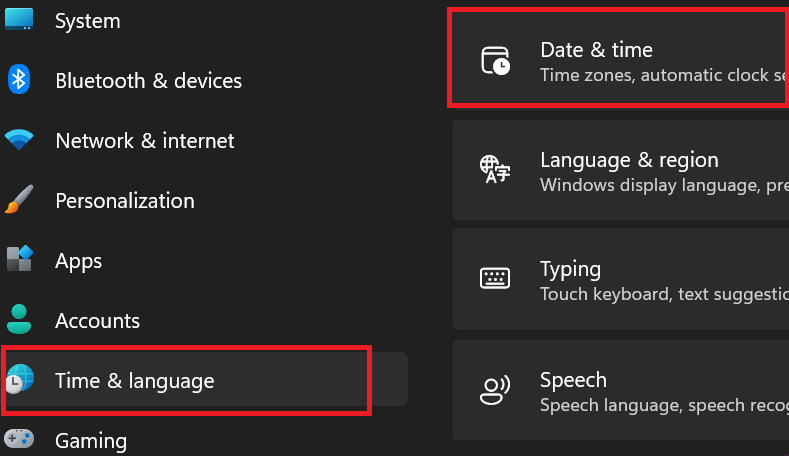
Step 2: Select the “Time & Language“. Press the “Date & Time“
Step 3: Scroll down to the “Time zone” section and click on the drop-down menu to see the list of available time zones.
Step 4: Select your desired time zone from the list.
Change Time with Control Panel
Step 1: First, go to the “Windows Start” button. Write the word “Control Panel” then open
Step 2: Press on “Clock and Region“
Step 3: Select the “Date and Time” and change the time zone.
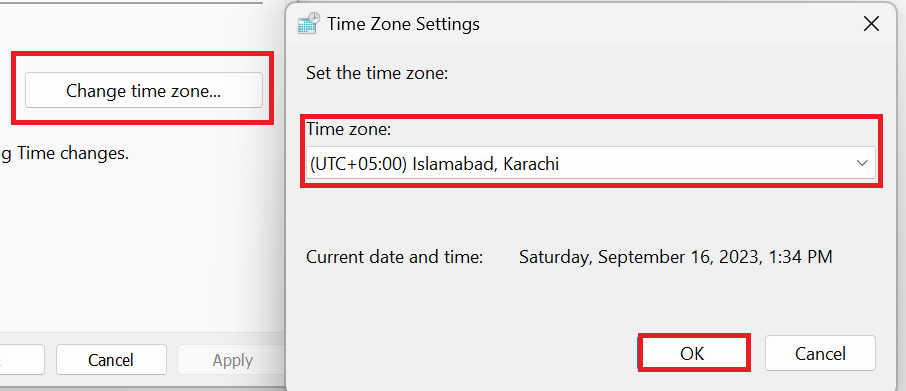
Step 4: Press the section“Change Time Zone” and click on the drop-down menu to see the list of available time zones.
Step 5: Select your desired time zone from the list.
Your system will immediately apply the new time zone settings. Do not restart your computer to ensure the changes take effect.
Changing the time zone on both Windows 10 and Windows 11 is a straightforward process that allows you to adjust your system’s clock to the correct local time. Whether you’ve moved to a different location or need to synchronize your computer’s time with a specific time zone, we’ve provided you with a step-by-step guide to make the process seamless.
What time zone are you currently using on your Windows computer and is it the correct one for your location? If you’ve ever encountered issues with your system’s time, share your experience with us in the comments below!
We hope this article helped you learn how to change the time zone on Windows 10 and 11.
Do you want to change the desktop background color on Windows 10 and 11?
Click on Start> Settings> Personalization> Choose colors> Accent color
A change in desktop background color is needed for every man when you’re bored with the image. You pull a color from your computer display. Choosing a new color gives you an enjoyable and fuller mind. You feel some change in your computer. You can create a custom color. Change the background color in this easy way.
Fellows step-by-step to change the desktop background color and make it cool.
Step 1 Go to “Window Start” and open “Settings.”
Step 2 Click on “personalization” and open “color.”
Step 3Choose a color.
Step 4 Scroll down and pull the “Accent color” from your background
Personalizing your desktop with a unique and appealing color can add a touch of individuality to your computing experience.
Changing the desktop background color on both Windows 10 and 11 is a simple and effective way to personalize your computer’s appearance. Whether you prefer a calming blue, a vibrant red, or any other color that reflects your style, we’ve provided you with an easy-to-follow guide to make the changes effortlessly.
What is your favorite desktop background color, and does it influence your mood or productivity while using your computer? Share your thoughts with us in the comments section below!
We hope this article helped to change the desktop background color on Windows 10 and 11.